Usually not. Hospitals treat spreading infection and injuries; they generally don't treat the tooth itself. Pulling a tooth is dental work, and our Belmont Cragin office does it on weekdays starting at 7:00 AM. Call (773) 555-0199 and the first open slot is held for you.
Nobody asks this at noon. It comes up at 2:00 AM, when a molar has been pounding since dinner, the ibuprofen has quit, and the only building with its lights on along Central is a hospital. There are two parts to a straight answer. Yes, a short list of dental problems should send you to an emergency room tonight. No, having the tooth pulled is almost never on that list.
Why pulling a tooth is dental work
From the outside an extraction looks like a quick pull. It isn't. A dentist won't take a tooth out without first seeing an X-ray: how many roots, which way they lean, and how closely they approach the big nerve in the lower jaw or to the sinus floor above the upper molars. One panoramic image answers all of that. The removal itself then calls for dental instruments, a chair with proper light and suction, and a dentist holding an Illinois license.
Some teeth come out whole. Others, the ones snapped off at the gum line or anchored by hooked roots, have to come out in pieces, which means opening the gum and smoothing a bit of bone afterward. That is minor surgery, work for a dental office equipped and trained for it.
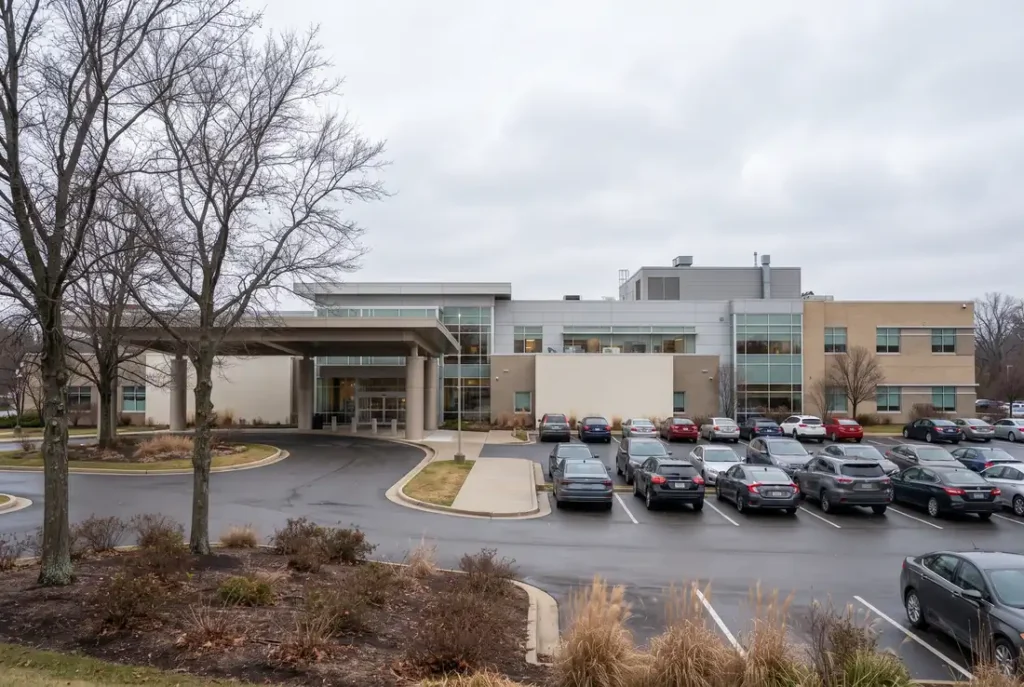
An emergency room is set up for other work. Hospitals treat spreading infection and injuries; they generally don't treat the tooth itself. Which means that after a hospital visit for a dental problem, the tooth is still in your mouth and the reason it hurt hasn't changed. A dentist is the next stop either way.
When the emergency room is the right place tonight
A handful of situations are beyond what any dental office can do. When one of these describes you, the hospital comes first and our office second:
- You're having trouble breathing or swallowing, or your mouth won't open fully, because of swelling
- The swelling is climbing up toward an eye or working its way down the neck
- A tooth infection has brought on a high fever, chills or confusion
- The jaw may be fractured after a hit to the face, you lost consciousness, or there's a cut that needs closing
- Your mouth is still bleeding after 20 to 30 minutes of firm, steady pressure
The nearest emergency room to our office is Community First Medical Center at 5645 W Addison St, at Addison and Central, about a mile north of us, 3 to 6 minutes by car.
The Mayo Clinic's page on tooth abscess describes how infection from a tooth can travel into the jaw, the neck and beyond, and why the tooth still needs attention once that spread is contained. It's worth reading if you can't decide whether tonight calls for the hospital.
When the answer is a dentist, not a hospital
Almost every other dental problem. A throbbing tooth with no facial swelling. A tooth that cracked or broke. An abscess that has stayed put, meaning a sore bump on the gum or a puffy cheek without fever. A crown that came loose. A wisdom tooth that acted up over the weekend. A tooth jarred loose on the ice outside the Blue Line. All of those belong in a dental chair, and our Belmont Cragin office takes care of them in-house: emergency tooth extraction, abscess and gum infection treatment, broken tooth repair and knocked-out teeth.
MouthHealthy, the American Dental Association's patient site, has a plain-language guide to dental emergencies. It says what we say on the phone: see a dentist fast, don't let a knocked-out tooth dry out, and never wait on swelling. The CDC's overview of oral health is worth a look too, for why a tooth infection is a health problem and not a nuisance.
What to do if you already went to the ER
Phone us the next weekday morning. The hospital may have knocked back the infection or stitched the injury, but the tooth behind it all still needs a dentist, and a tooth seen early tends to stay a smaller problem. Bring your discharge papers so our dentists can see what medication you got and when. We then take our own panoramic X-ray, examine the tooth and put what it needs on paper for you.
If the tooth needs treatment we don't provide here, we explain what the tooth needs and the next step. If it needs to come out, we can usually do that at the same visit.
How a same-day extraction works at our office
Every visit begins with a phone call; we don't take walk-ins. Reach (773) 555-0199 during our hours, Monday through Friday from 7:00 AM to 1:00 PM, and the front desk puts you into one of the same-day slots held each day at 8:00 AM, 11:00 AM and 1:00 PM. Ring after 1:00 PM and we may be able to see you later that day by appointment; if not, you get the first opening the next morning. Ring overnight or on a weekend and an answering service takes the call and reserves 7:00 AM on the next business day for you. We're at 5841 W Belmont Ave, Chicago, IL 60634, on W Belmont Ave between Central and Austin, with parking on site and the 77 Belmont bus at the curb.
The $99 covers an emergency exam, consultation and panoramic X-ray. Fees may be adjusted due to complications or unforeseen circumstances. Treatment is priced separately and quoted to you in writing before any work starts.
Once you're in the chair, our dentists study the X-ray, check the tooth and say whether it can be kept. When it can't, they walk you through the extraction, whether simple or surgical, and you get the price in writing before a single instrument is picked up. If your insurer is on our list, the exam and X-ray are billed to your plan. CareCredit, Cherry, Sunbit, Eve Financial and Proceed financing can be arranged if you ask. The cost and insurance page has the rest.
Getting through the night until 7:00 AM
When the hospital isn't needed, a few things make the hours until morning more bearable. Swish warm salt water. Press a cold pack to the cheek in rounds of 15 minutes on, 15 minutes off. A pain reliever from the drugstore shelf is fine if your doctor is okay with it, taken as the package directs and never more. Prop your head on two pillows to sleep, since lying flat makes a toothache pound. Keep aspirin off the gum; it burns the tissue. Eat on the opposite side and steer clear of anything very hot, very cold or sugary. The Mayo Clinic's toothache first aid page says much the same. Our toothache relief page goes further, as does the weekend and after-hours page, which covers Saturdays and holidays too.
Frequently asked questions
What about a knocked-out tooth: hospital or dentist?
The dentist, and quickly. Slide an adult tooth back into its socket if you're able, or carry it in milk, and call us at once. Every minute it's out of place lowers the odds it takes again; past an hour, those odds drop sharply. If the blow also hurt your head or jaw, go to the hospital first and come to us second.
Can urgent care pull a tooth in Illinois?
Same answer. Taking out a tooth is dental work; it needs a dental X-ray, dental instruments and an Illinois-licensed dentist. If your symptoms match the hospital list above, go to an emergency room rather than urgent care. If they don't, a dental office is the quickest way to be rid of the tooth. Call us and a time is yours.
Will the ER give me antibiotics and make the pain stop?
We can't say what any hospital will do. What we can say is that antibiotics quiet an infection for a while but leave the tooth that started it untouched, so the pain tends to come back when the course ends. The tooth needs to be treated or removed. Call us the morning after a hospital visit and bring the paperwork.
This article is general information, not dental advice. Call us or see a dentist for your own situation.