An impacted wisdom tooth is one that can't fully come in because it's blocked by bone, gum or the tooth in front of it. Many cause no symptoms. When one does, the usual signs are pain and swelling at the back of the jaw, a bad taste, and trouble opening wide. A tooth that keeps getting infected or is damaging the tooth next to it is often removed.
What "impacted" means
Wisdom teeth are the last molars to come in, usually in the late teens or early twenties. If there isn't enough room, the tooth can stay:
- Fully under the bone
- Partly through the gum, with a flap of gum over it
- Tilted toward the tooth in front, toward the cheek or lying on its side
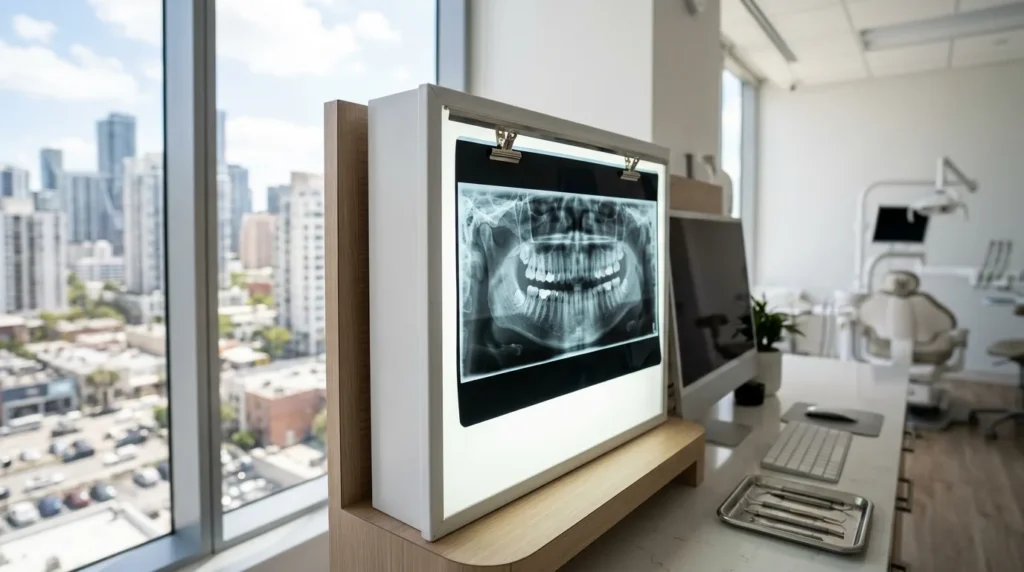
Only an X-ray shows the exact position.
Signs an impacted tooth is causing trouble
- Pain or tenderness at the very back of the mouth
- Red, swollen gum over the tooth
- A bad taste or smell
- Pain when you open wide or chew
- Swelling of the jaw or cheek on that side
- Pain in the tooth in front of it
Some impacted teeth don't hurt at all and are found on a routine X-ray.
Problems it can cause
- Gum infection over the tooth (pericoronitis). Food and bacteria get trapped under the gum flap.
- Decay. A partly erupted tooth, or the tooth in front of it, is hard to clean.
- Damage to the neighboring molar. A tilted tooth can push against the next tooth's root.
- Cysts. Rarely, a fluid-filled sac forms around the tooth and can damage bone.
When removal makes sense
Removal is usually advised when the tooth has caused repeated infection, decay, damage to nearby teeth or a cyst. A tooth that causes no problems may just be watched with X-rays over time. Your dentist will explain the reasons for your case.
What helps until your visit
- Rinse with warm salt water after meals to clear food from under the gum.
- Brush the area gently. Don't avoid it.
- Take an over-the-counter pain reliever, following the dosing on the package.
- Hold a cold pack on your cheek for swelling.
When it's urgent
Same-day care makes sense if your jaw is swollen, you can't open your mouth wide, or you have a fever. Go to the emergency room if swelling spreads under your jaw or toward your neck, or if swallowing or breathing gets hard.
- Wisdom tooth pain: relief and causes at the back of the mouth
- Dental abscess and gum infection treatment: when infection sets in
- Can a dentist pull an infected tooth right away?: what decides it
- Toothache at night: why it often gets worse
Trusted sources
- MedlinePlus: Impacted tooth: symptoms and treatment
- American Association of Oral and Maxillofacial Surgeons: Wisdom teeth management: problems impacted teeth can cause
- American Dental Association: Wisdom teeth: when removal is advised
Frequently asked questions
Do all impacted wisdom teeth need to be removed?
No. Teeth that don't cause pain, infection or damage are sometimes watched instead. Your dentist will check them on X-rays over time.
Can an impacted wisdom tooth cause ear pain?
Yes. Pain from the back of the jaw can be felt near the ear. Ear pain with a fever or drainage should also be checked by a doctor.
How long is recovery after an impacted wisdom tooth is removed?
Swelling and soreness are often worst on the second or third day. Most people feel much better within a week.
If you're in Chicago
Our Belmont Avenue office sees patients Monday to Friday, 7:00 AM to 1:00 PM. Walk-ins are welcome, though a call to (872) 268-6494 before you leave helps us prepare. You'll find street parking nearby, and an answering service picks up outside office hours. The emergency exam, consultation and panoramic X-ray are $99.
Many patients come over from Portage Park, Belmont Cragin and Montclare.
The $99 covers the emergency exam, consultation and panoramic X-ray. Treatment is priced separately and explained before any work begins.
Payment details are on our cost and payment page.
This article is for general education and is not a substitute for an exam by a licensed dentist.